
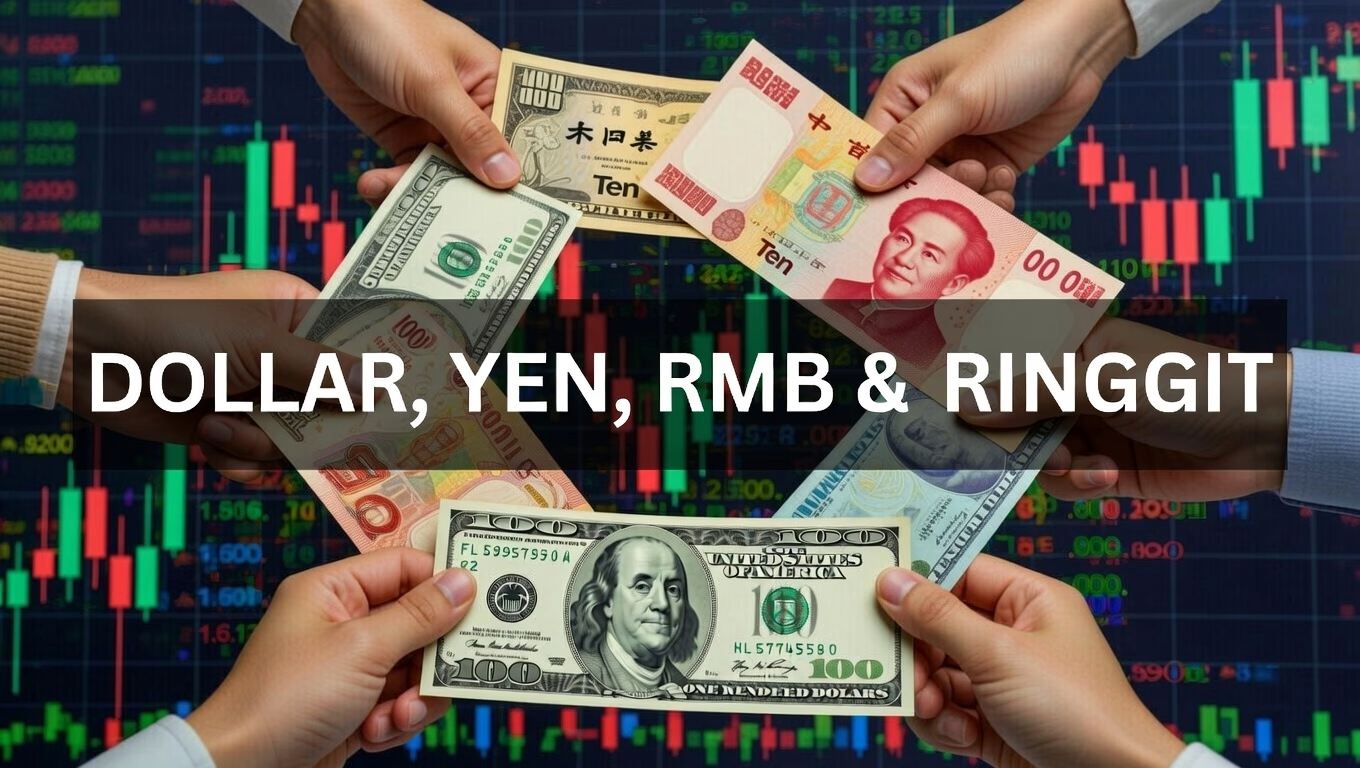
Key Reasons Behind the Ringgit’s Rise Since Late 2025
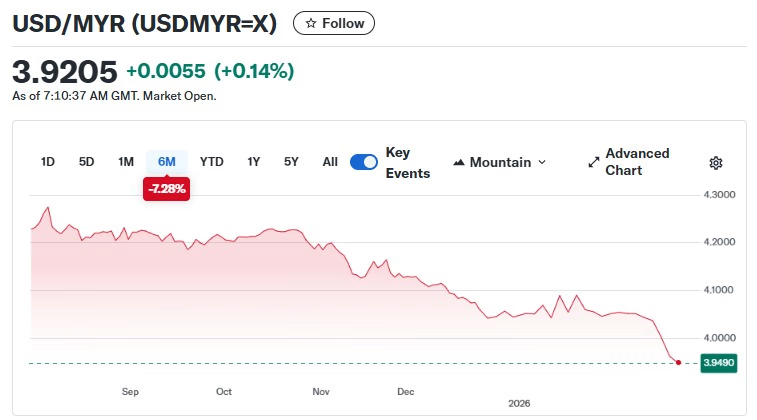
Many investors and analysts have applauded the recent Ringgit strengthening — up more than 6% since the end of October 2025. Several key factors are commonly credited for this impressive appreciation, including stronger fundamental economic performance, increased foreign direct investment (FDI), stable governance, and favourable perceptions of Malaysian bonds among global investors. All these elements have combined to boost demand for the Ringgit, resulting in its higher valuation.
Less Conventional Factors Fueling Ringgit Appreciation
Let’s explore a few less conventional reasons behind the Ringgit’s rise. Interestingly, our currency is not the only one enjoying appreciation right now. Several major currencies — particularly the Japanese Yen and the Swiss Franc — have also strengthened significantly in recent months.
USD Depreciation: A Deliberate Move?
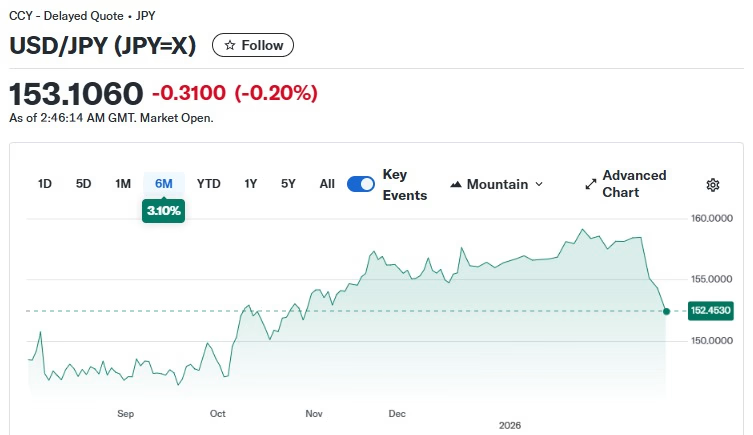
The United States appears to have deliberately stepped in to prop up the Yen after months of unsuccessful intervention attempts by the Japanese central bank. Since Q2 2025, the Yen had been experiencing persistent devaluation despite repeated efforts to reverse the trend. Some market observers have even described this coordinated action as “Plaza Accord version 2.”

- Bloomberg (Jan 25/26, 2026): “Yen Extends Gain as PM Warning Points to Intervention Risk“
- Bloomberg (Jan 26, 2026, Japanese edition/terminal excerpt): “Plaza Accord II’ Can’t Be Ruled Out After Recent Yen Jolt: GSFM“
- Bloomberg (Jan 27, 2026): “Japan’s Leader Faces Balancing Act on Yen Ahead of Election“
Currency appreciation brings clear benefits. Imported goods and materials become cheaper, which boosts overall purchasing power — especially noticeable when Malaysians travel abroad. However, we should not overlook the other side of the story.
The Two Sides of a Stronger Ringgit for Malaysia’s Economy
Many exporters are now facing increasing difficulties in maintaining trading volumes as their products become more expensive for foreign buyers. When the Ringgit rises, Malaysian goods priced in foreign currencies automatically cost more, putting pressure on competitiveness.
Challenges for Exporters in a Rising Ringgit Environment
Overall, Malaysia remains a net exporter and has consistently recorded trade surpluses for most periods. A sustained stronger Ringgit could therefore pose headwinds for export-oriented sectors over the medium term.
Ringgit Valuation and Net Exporter Malaysia Dynamics
What this means for investors The recent Ringgit strengthening reflects a combination of solid domestic fundamentals and favourable global developments. While the currency’s rise supports lower import costs and greater purchasing power, it also creates challenges for exporters who form a significant part of Malaysia’s economy.
What This Means for Investors and Malaysia’s Property Market
For property investors and developers in Malaysia, a stronger Ringgit can be a mixed signal. On one hand, cheaper imported building materials may help moderate construction costs. On the other hand, if export sectors slow, it could soften economic momentum in certain regions and indirectly influence demand for industrial or commercial real estate.
Looking ahead, the balance between these dynamics will be important. Investors who understand both the tailwinds (FDI inflows, bond appeal, economic stability) and the potential headwinds (export competitiveness) will be better positioned to navigate Malaysia’s real estate market in this new currency environment.
Let’s keep watching how these global and domestic forces evolve — because currency movements rarely occur in isolation, and their ripple effects often reach deeper into sectors like real estate than many initially expect.



Leave a Reply