

Market Pulse · Hulu Selangor · 2026
Once tipped to become the “second Petaling Jaya”, Bukit Beruntung instead became known for abandoned buildings and empty shoplots. Three decades on, something is changing. Is this forgotten township finally ready for its comeback?
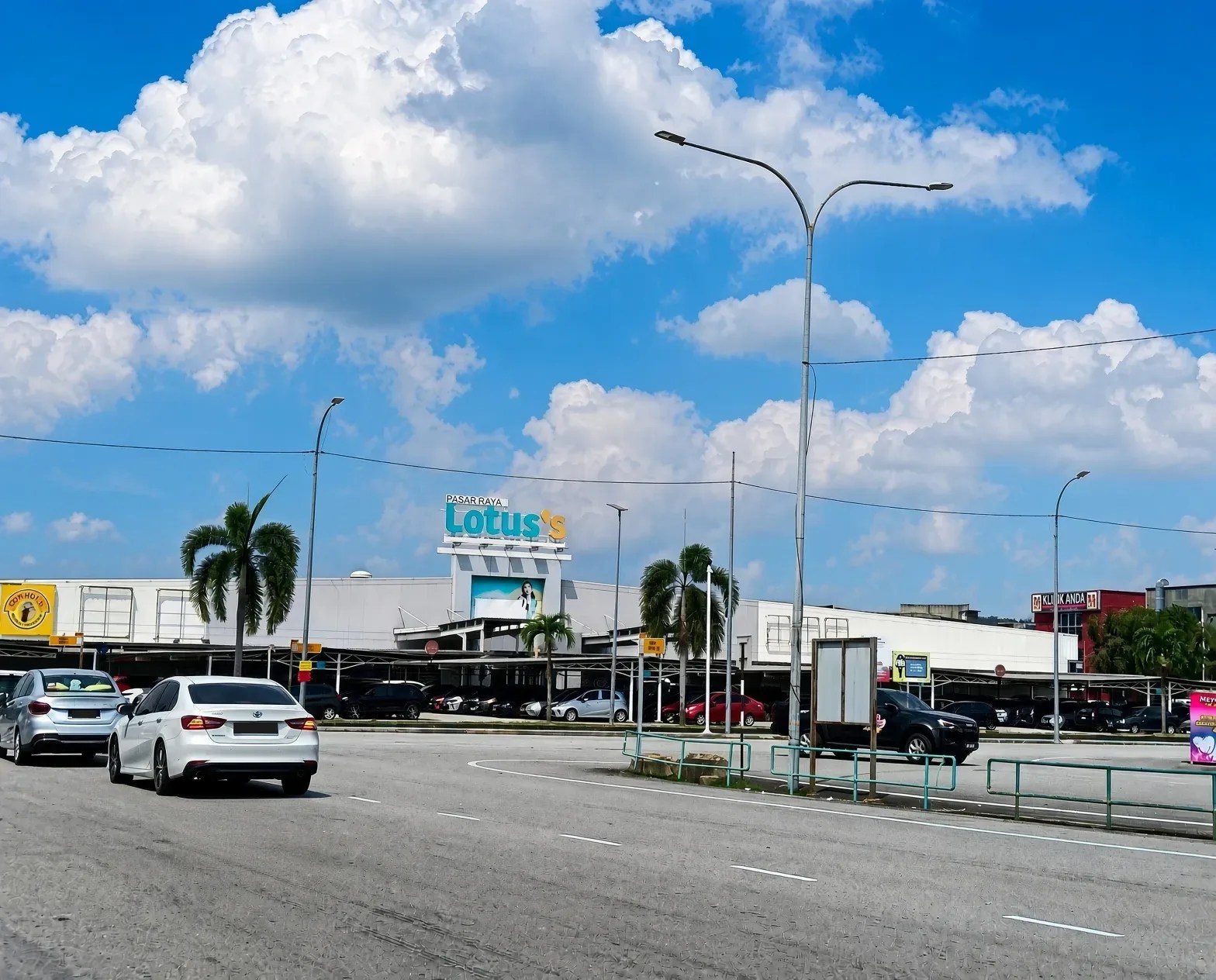
Bandar Bukit Beruntung is situated in Hulu Selangor district, more than 40 km from Kuala Lumpur. It sits between Serendah and Batang Kali. During the early 1990s it was sold as “the second Petaling Jaya” and was even once rumoured to get a new airport here, replacing Subang Airport. If you went there in the early 2000s, much of it looked abandoned. A decade later, the same roads still showed stripped shoplots and link factories. Ironically, many people have also lived here since the beginning. Now things have started to look different amid such contrasting scenes.
This confusion arises largely because the township was big and developed early, so many people hold bits and pieces of memory about a rising star that suddenly went bust. The economic boom of the 90s, the 1997 Asian Financial Crisis, the “lost 20 years,” and the ECRL. What comes next? Forgotten town, or about to take off? It is not that simple. This massive township deserves more time to digest properly.
Built in the boom
From 1988 to 1996, Malaysia’s real GDP grew more than 8% every year. The peak was 10.0% in 1996. That is nine years in a row, a period that is hard to replicate anymore. Growth slowed to 7.3% in 1997, then contracted 7.4% in 1998.[6]
The township dates to 1992. It covers about 2,900 hectares (Cyberjaya is ~2,894 ha).[2][35] The 1990s vehicle was Europlus. Knight Frank names Talam Transform, formerly Talam Corp, as the original master developer of a mixed residential, industrial and commercial town.[1] Talam’s founder, Tan Sri Chan Ah Chye, took the group through a reverse takeover in 1990 and ran Kumpulan Europlus.[4]
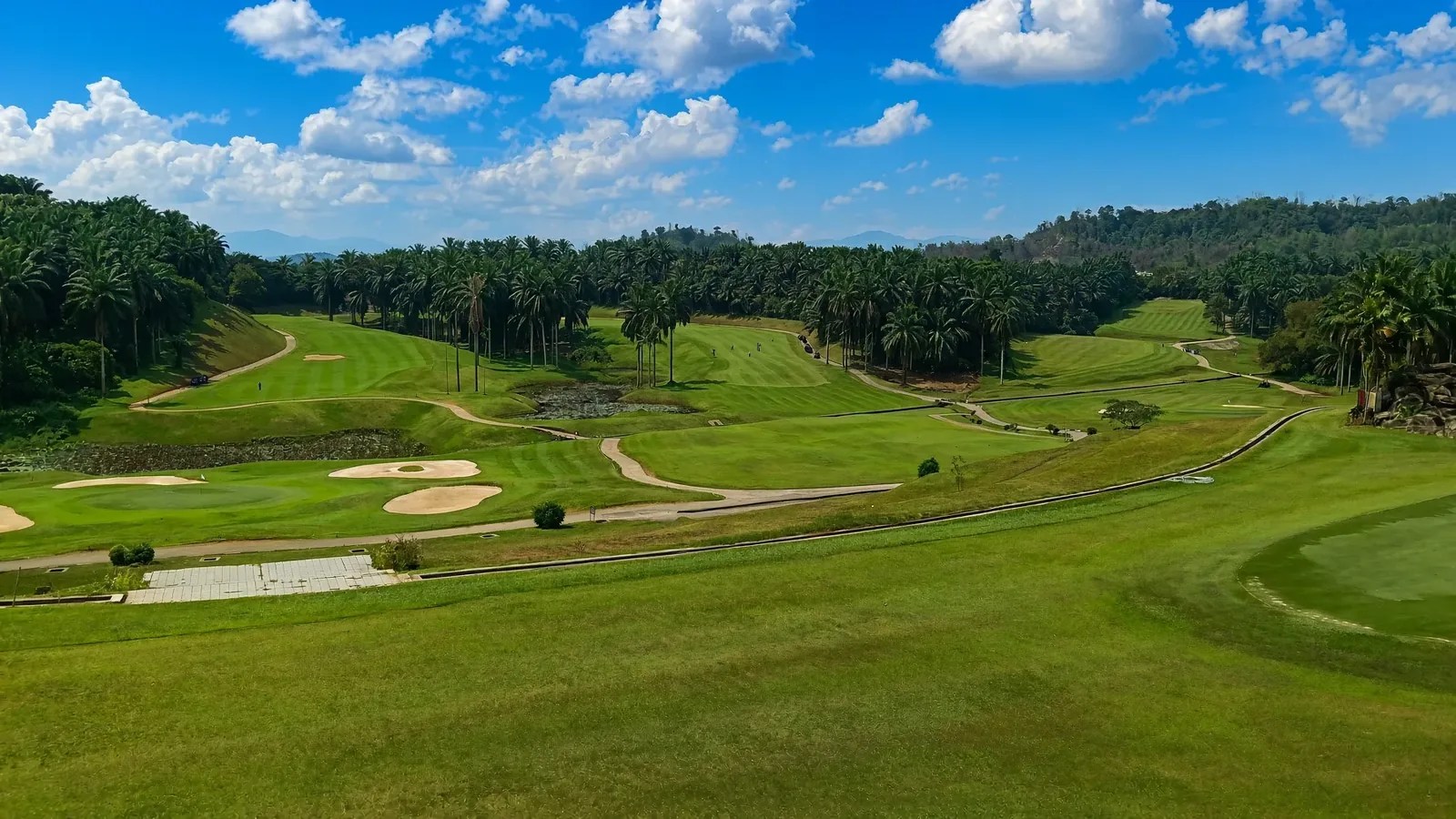
What they put on the ground was mixed from the start: terrace and detached houses, low- to medium-cost apartments, shop-offices, terrace and detached factories, vacant commercial land, and a 363-acre, 18-hole golf course and country club that opened in late 1993 and is still operational today.

The North-South Expressway was officially opened on 8 September 1994 — the road that connected a northern Selangor township to the rest of the network.[7] Access today is through Bukit Beruntung Interchange, PLUS Exit 118,[2] and Federal Route 3208 from Sungai Choh, opened in January 2014. Both Bukit Beruntung toll (northern) and Sungai Buaya toll (southern) serve as two vital exits, strategically placed at the north and south of the township.[23]

Turbulence at the end of the 1990s
After the major political upheaval and later the AFC in 1997, things took a drastic and painful turn: Second PJ and a second international airport came to nothing. The north had been sold a growth corridor — Bukit Beruntung, Lembah Beringin, Proton City, an airport near Tanjong Malim. The airport went to Sepang. A university promised for Bukit Beruntung did not arrive. A college there later closed. Proton City did land on a 4,000-acre tract about 5 km north of Tanjong Malim. The rest of the northern pitch did not.[1][25]
Some people hit by the financial crisis became delinquent, and many decided to leave what they had bought and let time pass, leaving a large number of houses, shoplots and link factories abandoned. Over the years, buildings lost window frames, glass doors and electrical cables. Weeds took the roads, leaving an eyesore for passers-by.[1]
The rest of Selangor filled in
The mirror of what was taking place on the other side of Selangor through the 2000s and into the 2010s: new townships, commercial areas and factories clustered south toward Cheras, Kajang, Serdang, Balakong and even Nilai, Negeri Sembilan, and west toward Klang and Panglima Garang. Those belts filled up and crowded with bustling activity.
Cheap houses, a car plant next door, and people who stayed
Knight Frank, using the 2020 census, puts Bukit Beruntung at about 86,000 people. Malay 56%, Chinese 25%, Indian 10%. Working-age residents aged 20 to 64 are 63.7%. Hulu Selangor district had 258,100 people in 2024, the second-lowest district population in Selangor after Sabak Bernam. Mean monthly household income was RM8,779 in 2022, also second lowest in the state.[1]
Amy Wong of Knight Frank reads much of the recent population as households leaving Kuala Lumpur and other urban centres for lower prices and a neighbourhood, still tied to a road commute.[1] Next to Petaling Jaya, Shah Alam and KL, that is cheap housing. It is also a labour pool sitting next to factories.
Heavy industry set its foothold
The Perodua manufacturing plant is situated at Sungai Choh, Rawang, just about a 15-minute drive to Bukit Beruntung. It was established in 1993; its headquarters sit on 522 acres, with capacity of up to 320,000 vehicles a year. About 11,500 people work there directly, and about 100,000 if you count suppliers and dealers,[11] many of them located around the Bukit Beruntung industrial areas. This is the real game changer.

Then the UMW High Value Manufacturing Park launched in 2015, an 861-acre heavy industrial park. It successfully attracted large manufacturers beyond the automobile sphere.[1] This wider Serendah–Rawang belt has picked up auto parts and other manufacturing over the years and is one of the key factors paving the township’s comeback story.
When there are people and job opportunities, commercial activities thrive
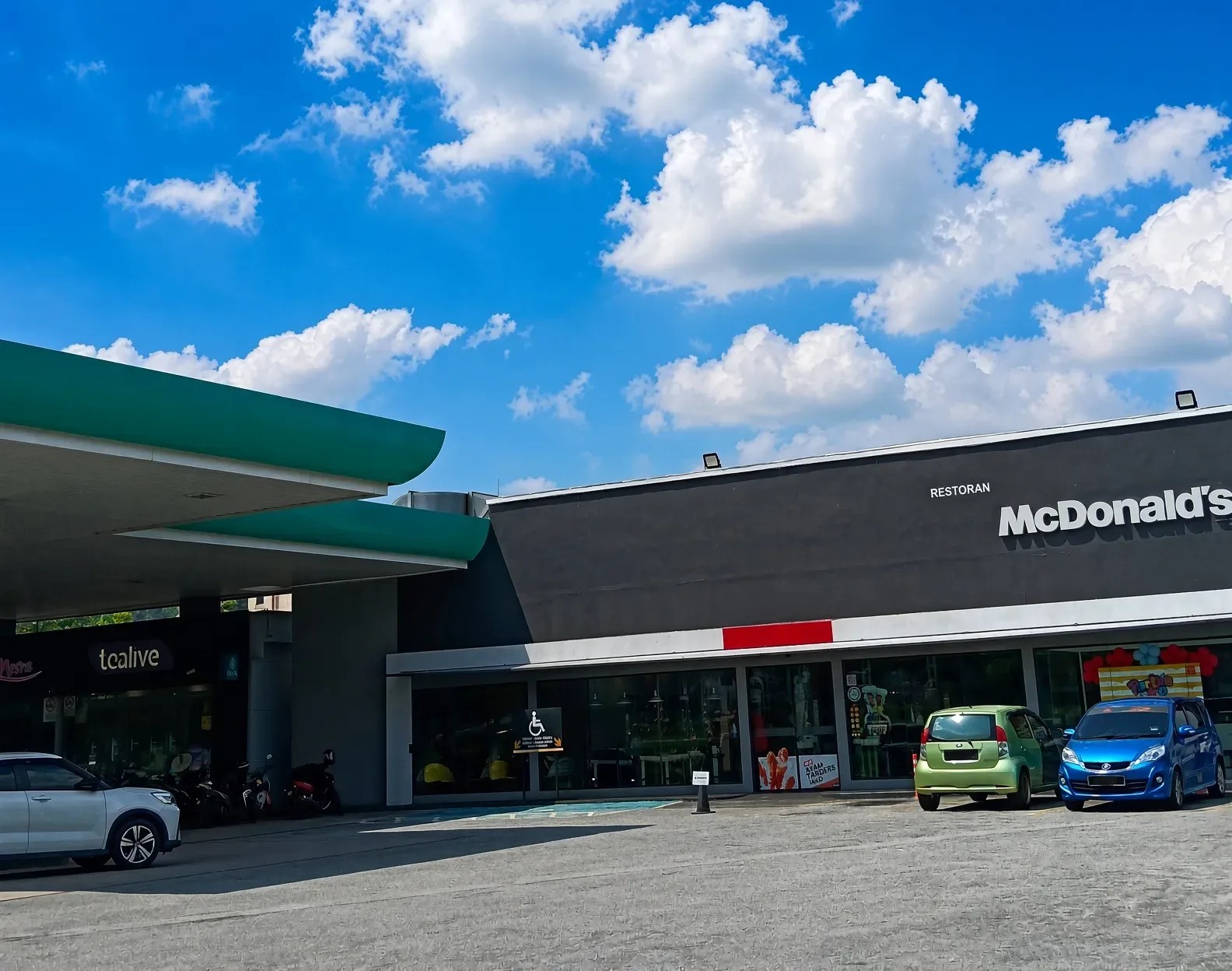
Inside the township, bustling commercial life is apparent from Adenium Business Centre, next to the PLUS interchange, toward the areas surrounding the Lotus’s hypermarket. Fetching a rental rate of RM5,000 and above for a ground-floor intermediate shop lot is common in those areas.[1] MK Land’s Taman Bunga Raya project: more than 11,000 affordable homes with over 40,000 residents, and expected to reach toward 70,000 in the next decade.[1]
Another notable update is the JPJ Puspakom, replacing the Wangsa Maju centre, under construction and expected to be operational by the end of 2026 (Estate Market Pulse).[36]


3 vital infrastructures — the connectivity that brings people closer here
-
LATAR, opened 23 June 2011
It is a toll road that links the Kuala Selangor–Ijok, Puncak Alam–Rawang–Selayang corridor in the north-west piece of the planned Kuala Lumpur outer ring.[9][10] Until then, travelling between these areas meant a painful trip over the old trunk road that could easily take 45 minutes to more than an hour amid countless traffic lights and jams. Now, going from Selayang toward Puncak Alam is about a 20-minute smooth drive.
-
Rawang Bypass, Federal Route 37
Cost RM628 million and opened to traffic on 28 November 2017.[8] Although it is only 10.7 km long, it gives seamless access to people from Selayang and Kepong. Users get a toll-free journey with a great jungle scene along the way (Trip.com),[37] and shorter mileage compared with using the North-South Expressway. Cutting the Serendah–Selayang crawl on Federal Route 1 from up to two hours through Rawang town to about 30 minutes is a solid plus![8]
-
ECRL, 2027 through 2028
Although there is no station in Bandar Bukit Beruntung, the ECRL Serendah station is unlike the rest — it is planned specifically for a direct connection and integration into the existing KTMB cargo network, a real deal especially for the industrial and logistics sectors. It not only links East Coast to West Coast, but also supports northbound (toward Thailand) and southbound (to Singapore) goods transportation.[13][14][15]


Other positive factors
Freehold: Freehold is common. It matters because you do not need the headache of renewing the title (subject to approval) when a leasehold tenure runs out — and the renewal premium is not cheap.
Higher elevation: The news of the worst Selangor flood in 2021 is still fresh (CNA).[38] Many have seriously rethought such unfortunate events into their playbook, for both private residences and industrial consideration. Floods not only wreaked havoc and destroyed properties and goods, but also reshaped insurance premiums for such risk going forward.
Bukit Beruntung and its surrounding areas sit a little higher than the west-coast floodplain. A point sample at the published town coordinates is 52 metres.[28] Shah Alam is about 20 metres.[33] Klang is about 19 metres.[34] That is a modest step, not a hilly condition, and it has made large layouts easier to plan and build. It does not mean there is no flood risk, but the risk is greatly minimized.
The takeaways
The stigma of Bukit Beruntung still holds for many of us, while the slow transformation toward the brighter side is hard to dispute.
But one thing is quite certain. Bukit Beruntung is a truly self-sustaining town with its own commercial and industrial activities, amid large and matured housing schemes dating back to as early as the end of the 1990s. Over the years, it has survived and slowly evolved into its unique ecosystem. So it is no surprise why it has gone under the radar for so long…
Bandar Bukit Beruntung forms a crucial part of northern Selangor’s growth corridor. For the Puspakom update, see the earlier note on this site. Estate Market Pulse covers Seangor & KL commercial (shoplots) and industrial — factories, warehouses and industrial land.
Sources
[1] The Edge, Racheal Lee, 27 January 2026
[2] Wikipedia, Bukit Beruntung
[4] Talam Transform, company overview
[6] World Bank, Malaysia real GDP growth 1986–1999
[7] Wikipedia, North–South Expressway
[9] LATAR
[10] LATAR map
[11] Perodua, about us
[13] MRL
[14] The Malaysian Reserve, ECRL C2
[15] The Malaysian Reserve, ECRL logistics
[25] Wikipedia, KLIA
[28] Open-Meteo elevation, Bukit Beruntung
[33] Open-Meteo elevation, Shah Alam
[34] Open-Meteo elevation, Klang
[35] Wikipedia, Cyberjaya

Leave a Reply